River Rock Installation Services in Washington, DC
River Rock Installation Kings provides river rock installation, rock bed landscaping, and dry creek bed services in the Washington, DC area for both residential and commercial properties, from foundation strips and flower beds to full rock yards. Contact us now for a free estimate.
How Much Does River Rock Installation Cost in Washington, DC?
River rock installation in Washington, DC costs anywhere from $380 to $1,620 on average for a typical residential bed using one to four tons of rock. The price depends on the rock type and size, the area and depth, removing sod or old mulch, fabric and edging, delivery distance, and how far the rock has to be wheeled from the truck.
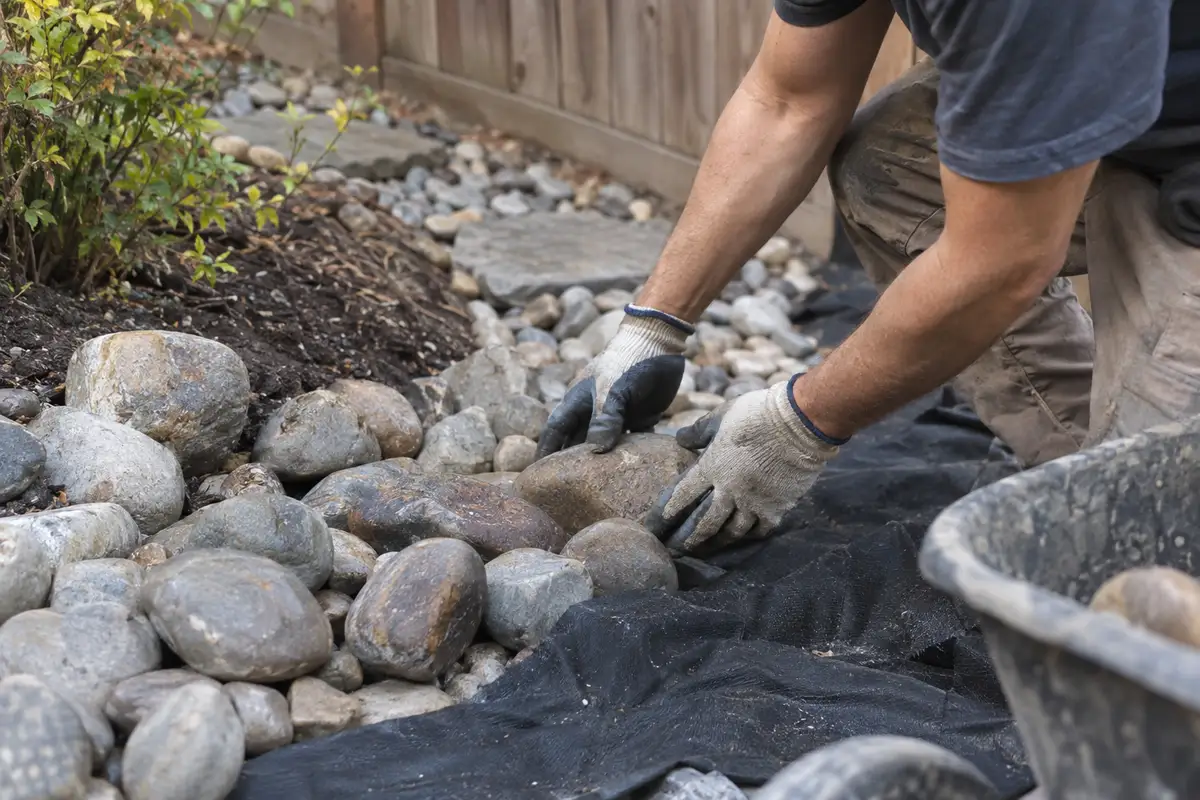
Do You Install River Rock at Homes and Businesses?
Yes, we install river rock at houses, townhomes, offices, retail centers, and HOA common areas. Let us know the property type and roughly how big the area is.
Do You Service My Area?
Yes, we cover the Washington, DC area. Send us the property address and we'll confirm.
How Do You Get River Rock to a Washington, DC Home With No Driveway?
Only 11.0 percent of homes in Washington are single-family detached, so many have no driveway or side yard where a truck can dump stone. For those jobs we often bring rock in bags or bulk bags and carry it to the yard by hand or wheelbarrow. Tell us how we reach the bed and whether there is parking nearby.
How Soon Can You Install River Rock?
Most jobs can be scheduled within a week or two, depending on the season and when the rock supplier can deliver. Spring is usually the busiest time.
What Information Do You Need for a River Rock Quote?
We need the address, the rough length and width of each area, photos, and the rock size and color you like. Tell us whether there's grass, mulch, or old rock there now.
Will I Need to Be Home During the Installation?
No, as long as we can reach the beds and you've approved the layout and the rock. It helps to be there when the delivery truck arrives so you can confirm where it dumps.
Do I Need HOA Approval to Put River Rock in My Yard?
Yes, in many HOAs, especially for front yards or for replacing lawn with rock. Check your guidelines or submit the plan before we order the rock.
Can I Get a Price Before the Work Begins?
Yes, we confirm the price before starting. If we find buried concrete, old fabric, or roots once we dig, we talk to you before doing extra work.
How Long Does River Rock Installation Take?
We finish most residential beds in one day. Hand spreading takes roughly 2 hours per ton, so large rock yards, long wheelbarrow runs, or sod removal can take two or three days.
How Much River Rock Do I Need?
One ton of 1 to 3 inch river rock usually covers about 45 to 60 square feet at 3 inches deep. We measure the area and add about 10% so you don't come up short.
Can You Install River Rock I Already Bought?
Yes, we can spread rock you bought in bags or had delivered in bulk. A ton is about 50 of the 40 pound bags, so tell us how many you have and we'll check it covers the area.
What Size River Rock Is Best for Landscaping?
We use 1 to 3 inch rock for most beds and foundation strips. Smaller 3/4 inch rock suits narrow spaces, and 2 to 5 inch cobble works for creek beds and splash areas.
What Color River Rock Should I Choose?
We suggest a color that suits the house, with heat in mind. White rock throws glare onto walls and windows, and dark rock gets hot in full sun. Locally quarried stone is often the cheapest to deliver.
How Deep Should River Rock Be?
About 2 to 3 inches for 1 to 2 inch rock, and closer to 4 inches for larger stone. Going too thin lets the fabric show through.
Do You Put Landscape Fabric Under River Rock?
Yes, in most beds we lay permeable landscape fabric with the seams overlapped at least 3 inches. It keeps the rock from sinking into the soil. We don't use plastic sheeting, since it traps water.
Will Weeds Grow Through River Rock?
Yes, some will over time. Our fabric stops most weeds from below, but leaves and dirt settle between the stones and seeds sprout in them.
Can You Put River Rock Around My House Foundation?
Yes, foundation strips are one of our most common jobs. We keep the ground sloping away from the house and keep the top of the rock below the siding and any weep holes.
Is River Rock Better Than Mulch Around the House?
Yes, for many foundation strips, because rock doesn't rot, blow away, or need topping up every year. For planting beds we often suggest mulch, since it keeps roots cooler and feeds the soil.
Does River Rock Attract Termites or Bugs?
No, rock gives termites nothing to eat, unlike wood mulch. It can still hold moisture against the house, so we keep the ground sloping away from the foundation.
Can You Replace My Mulch With River Rock?
Yes, we rake out the old mulch, level the bed, lay fabric, and spread the rock. Putting rock straight over mulch lets it sink as the mulch breaks down, so we remove it first.
Can You Put River Rock Over Grass?
No, we cut out the sod first, or grass grows up through the rock.
Can You Install River Rock Around Plants and Shrubs?
Yes, we cut the fabric around each plant and place the rock by hand near the stems. Tell us which plants stay and whether you want room left to add more later.
Will River Rock Make My Plants Too Hot?
Yes, it can in full sun. Rock holds and reflects heat, and white rock adds glare, so heat-sensitive plants may need more water or a cooler mulch instead.
Can You Put River Rock Around a Tree?
Yes, we can ring a tree with river rock. We keep the stone a few inches off the trunk and avoid heavy digging over the main roots.
Can You Build a Dry Creek Bed With River Rock?
Yes, we dig a shallow channel, line it with fabric, and set larger cobble along the edges with smaller rock in the bottom. Tell us where the water comes from and where you want it to go.
Can You Put River Rock Under My Downspouts?
Yes, a rock splash area slows the water and stops it from washing out soil. If water is pooling against the foundation, the downspout may also need an extension.
Can River Rock Fix Standing Water in My Yard?
No, not on its own. Rock lets water pass through, but if the ground slopes the wrong way, the area needs regrading or a drain, and we'll tell you which.
Can You Install River Rock on a Slope?
Yes, we use larger rock and buried edging so it doesn't wash downhill.
Can You Turn My Lawn Into a Rock Xeriscape?
Yes, we remove the turf, set the edging, and install rock around drought-tolerant plants. If your water utility offers a turf replacement rebate, check its rules first, since many need approval before work begins.
Can You Install Mexican Beach Pebbles?
Yes, we install Mexican beach pebbles. They're smooth, dark gray to black, and often cost several times as much per ton as standard river rock.
Can You Make a Walking Path With River Rock?
Yes, but large round stones roll underfoot. For paths we use small river rock or pea gravel, or set flagstone stepping stones with river rock between them.
Can You Add Boulders to a River Rock Bed?
Yes, we place accent boulders with the rock. Large ones need a skid steer or several people, so tell us the size you want and whether equipment can reach the spot.
Can You Add More River Rock to an Existing Bed?
Yes, we can top up thin spots or extend a bed. Send a photo or a sample stone so we can find the closest match in size and color.
Do I Need to Call 811 Before You Dig?
No, we request the 811 locate before digging for edging or a creek bed. It doesn't mark private lines like sprinklers or landscape lighting, so point those out to us.
Where Will the Delivery Truck Dump the Rock?
Usually on the driveway or a tarp close to the beds. Let us know about soft lawn, low wires, or a narrow gate, since a loaded dump truck is heavy and can crack thin concrete.
Do You Install Edging to Keep the Rock in Place?
Yes, we install steel, aluminum, plastic, or stone edging between the rock and the lawn. It keeps stones out of the grass, where a mower can throw them.
Can I Install River Rock Myself?
Yes, a small bed is a fair weekend project with bagged rock. We get called for the larger jobs, where several tons move by wheelbarrow and the sod removal and edging take most of the time.
How Do I Keep Leaves Out of River Rock?
A leaf blower on a low setting or a plastic leaf rake works best. Clearing leaves before they break down keeps weeds from rooting between the stones.
Can You Remove River Rock Later if I Change My Mind?
Yes, but it's slow work, since every stone has to be shoveled out and hauled away. Fabric underneath makes removal much easier than rock pressed into bare soil.
Do You Clean Up After the Installation?
Yes, we haul away the sod, old mulch, and empty bags, and sweep stray stones off the driveway and walks.
